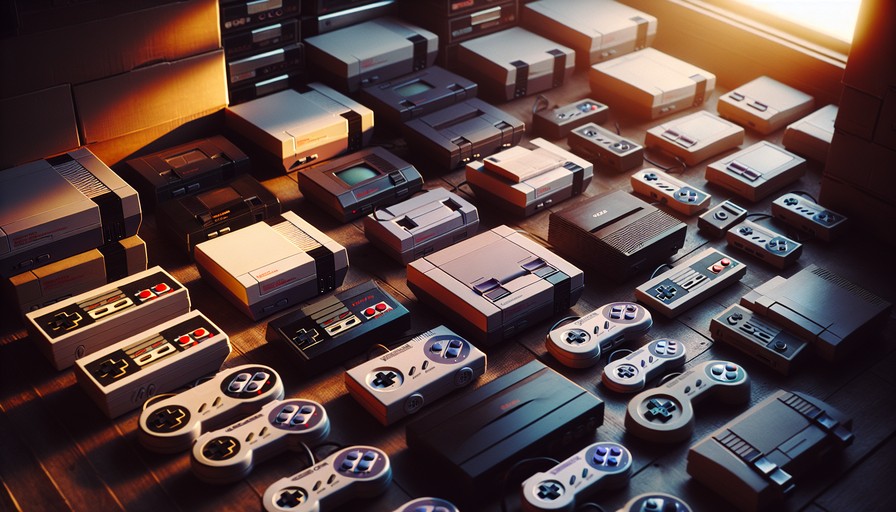
You found a copy of a Japanese RPG at a flea market. The box art is gorgeous, the cartridge feels right, you get home, you slot it in — and nothing. Or worse, it boots for two seconds and dies. Welcome to the world of retro region locking, where console manufacturers spent decades making sure you couldn't play games from the "wrong" country.
It's one of the most frustrating things about collecting old games. And the history behind it is genuinely interesting, even if the experience of hitting a region lock is anything but.
Region locking on retro consoles is a hardware or software mechanism that stops you playing games from another country. Some consoles use physical cartridge shapes to block imports. Others use chip-level lockout. The fix depends on the console — some need adapters, others need a modchip, and a lucky few have no region lock at all.
Why Did Region Locking Even Exist?
Follow the money. Console makers and publishers wanted to control release schedules, pricing, and ratings compliance across different territories. If a Japanese game launched six months before its Western release, they didn't want importers undercutting the whole operation. Region locking was the wall they built to stop that.
There was also a technical angle. TV standards in the 1980s and 90s genuinely differed — NTSC in North America and Japan, PAL in Europe and Australia. Those formats run at different refresh rates, and a lot of early hardware simply couldn't handle both. So some region locking wasn't malicious corporate strategy so much as a side effect of incompatible broadcast standards. Doesn't make it less annoying, but it's worth understanding.
The NES: Where It All Started
The NES is the original offender. Nintendo used a lockout chip called the 10NES — a little authentication handshake that had to complete successfully before a game would boot. North American cartridges have a different connector shape from Japanese Famicom cartridges too, so you can't even physically slot one into the other without an adapter.
The 10NES chip became infamous. It caused so many problems — including games failing to boot on dusty or worn-down consoles — that some people discovered you could disable it by bending a pin on the cartridge or the console. That's where a lot of early console modding culture was born.
If you want to play Famicom games on a NES today, your options are:
- A Famicom-to-NES adapter (cheap, widely available)
- Disabling or bypassing the 10NES chip in the console
- Just buying a Famicom — they're not expensive and have a massive library
The SNES and Mega Drive: Physical Blocks and Clever Workarounds
SNES
The SNES (called the Super Famicom in Japan) uses a combination of physical cartridge shape differences and a regional lockout chip. The Japanese Super Famicom cartridges are smaller and shaped differently from PAL or NTSC-US cartridges. But — and this is the key thing — the hardware underneath is largely the same. Which means if you can physically get the cartridge in, most games will actually run.
The fix? Snap out the two plastic tabs inside your SNES cartridge slot. It's a simple, reversible modification that takes about 30 seconds with a screwdriver. After that, you can use a region adapter for games that still have software lockout. The SNES import scene is huge precisely because this barrier is so easy to overcome.
Mega Drive (Genesis)
Sega's approach on the Mega Drive was a bit different. The Japanese Mega Drive, North American Genesis, and PAL Mega Drive all have different cartridge shapes — but they also have a region detection pin. Flip that pin's signal and a lot of games will run in a different region without any fuss.
The classic "hold reset and flip the switch" modification involved wiring a physical switch to change the region signal mid-boot. It sounds technical, but instructions are everywhere and it became one of the most popular retro mods ever. There are also "Game Genie" style adapters and passthrough carts that handle the region override without any soldering.
The 32-Bit Era: PS1 and Saturn Get Serious
PlayStation 1
The PS1 raised the stakes. Sony used a region code embedded in the disc data itself, combined with a wobble in the CD track that the console checks for. You can't just swap a pin or snap a plastic tab. If the disc doesn't match your console's region, you're getting nothing.
This is where modchips became mainstream. A PS1 modchip intercepts the region check and fools the console into thinking every disc is legitimate and local. Installation requires soldering directly to the motherboard — doable, but not a beginner project. Alternatively, some people used the "swap trick," physically swapping a legitimate disc for the import mid-spin during boot. Mechanically sketchy, but it worked.
If you're building a retro collection today, finding a pre-modded PS1 is genuinely the easiest path. They're common, they're cheap, and a good modchip install is invisible and stable.
Sega Saturn
The Saturn had both region locking and a notoriously finicky disc authentication system. Action replay cartridges became the go-to solution — slot one in, and it bypasses both the region check and lets you play backups. The Saturn import scene in the late 90s ran almost entirely on these carts. They're still easy to find and work perfectly on original hardware.
The PS2: The Last of the Big Region-Locked Consoles
The PS2 is probably the most region-locked console most people will encounter in retro collecting today. Sony implemented DVD region coding on top of its own game region lockout — so you're dealing with two separate systems at once. A PAL PS2 won't play NTSC games, and it also won't play Region 1 DVDs. It's the full package of inconvenience.
The solutions that work best in 2024:
- FreeMCBoot — a softmod installed via a memory card that lets you boot region-free games and backups from a USB drive or hard drive. No soldering, no permanent changes. This is the one we'd point most collectors toward.
- Modchip — still available, gives you more options, but requires soldering and finding someone who knows what they're doing.
- Swap magic discs — the old-school approach, still functional, though FreeMCBoot has made it mostly obsolete.
The PS2 has one of the largest game libraries in history, and a significant chunk of interesting titles never left Japan. FreeMCBoot genuinely unlocks the whole thing. It's one of the best retro gaming decisions you can make.
A Few Consoles That Got It Right (No Region Lock)
Not every console from this era was a wall of restrictions. The Neo Geo AES had no region locking at all — its games ran worldwide, though the cost of cartridges has always been eye-watering. The Game Boy and Game Boy Color had no region locking either, which partly explains why their import scenes are so active today. Pop any cartridge in and it works. Simple.
The Sega Game Gear was region-free too. These things matter when you're building a collection — knowing which systems actually welcome imports saves you a lot of frustration.
Common Problems and Fixes
The game boots but the screen is black and white
Classic PAL/NTSC mismatch. Your display is probably receiving a signal it doesn't understand properly. Try using a different cable, or look for a forced RGB output option. Some TVs handle the conversion; older CRTs often don't.
The game won't boot at all
Check whether your mod is actually active. On consoles with switch mods, make sure the switch is in the right position before powering on. For chip mods, a bad solder joint is often the culprit.
Audio or speed issues on PAL games
PAL games running on NTSC hardware (or vice versa) can play at the wrong speed. This was a real problem back in the day — PAL games were often slowed down compared to their Japanese originals. Most modchips or softmods on PS1/PS2 include options to force NTSC output specifically to solve this.
FAQ
Is modding a retro console illegal?
It varies by country and is genuinely a grey area in many places. Modding a console you own to play games you own is generally considered acceptable. Using mods to play pirated games is a different matter. We're talking here about playing legitimate import cartridges and discs you've actually bought — that's the whole point of import gaming.
Will modding damage my console?
A well-done mod won't. A badly soldered modchip can cause problems, but the risk is in the execution, not the mod itself. Softmods like FreeMCBoot carry almost no risk — they're installed on a memory card and can be removed at any time.
Can I play PS2 imports without modding?
Not reliably. There are no legitimate region-free PS2 models. You need either a softmod or a hardware mod to play imports consistently.
Do NTSC games look worse on a PAL TV?
On a modern HDTV, usually not. Modern screens handle both signals fine. On an old CRT, you might get black and white output or a rolling image unless your TV has a multi-standard mode. Many European CRTs from the 90s actually did support NTSC, so it's worth testing before assuming the worst.
Where do people buy retro import games today?
eBay is still the main marketplace globally. Japanese sellers in particular have well-priced stock. Specialised retro game stores — both physical and online — often have curated import sections. Prices for sought-after titles like Japanese PS1 RPGs have climbed significantly in recent years, so buy what you love rather than speculating.
What's the easiest retro console to start importing for?
The SNES. Snap two plastic tabs, use a cheap adapter for stubborn titles, and you're in. The Japanese Super Famicom library is enormous, prices are reasonable, and the hardware is rock solid. If you want to dip a toe into import gaming, that's where we'd start.
Region locking was a product of its time — a mix of legitimate technical constraints and publishers protecting territory rights. The consoles that enforced it most aggressively, like the PS1 and PS2, are now the ones with the most active modding communities. The irony is complete.
If you're building a retro collection and you care about accessing the full global library of games — and you should, because some of the best games from this era never left Japan — then understanding which consoles need what kind of work is genuinely useful knowledge. The NES needs an adapter and a chip workaround. The SNES just needs two tabs snapped off. The PS1 wants a modchip or a steady hand for the swap trick. And the PS2? Get FreeMCBoot on a memory card and unlock the whole thing. It's one of the best afternoons you'll spend in retro gaming.
Our top pick
Unlock region-locked content with a reliable VPN — tested and verified by our team.
Visit Nordvpn